In The City · 1985
Interview — title pending
The opening line of the article is cropped from part 1 — the scan starts mid-sentence.
...heart pounding, heart warming, moving you this band. Pull no punches! Unlike many of today's bands, Furniture can not only be summed up by a press statement and a photograph. Furniture are far too tactile for that kind of machinery, their music is their only real vehicle of expression, and these ideas of high fashion / image conscious bands, that in itself makes a refreshing change.
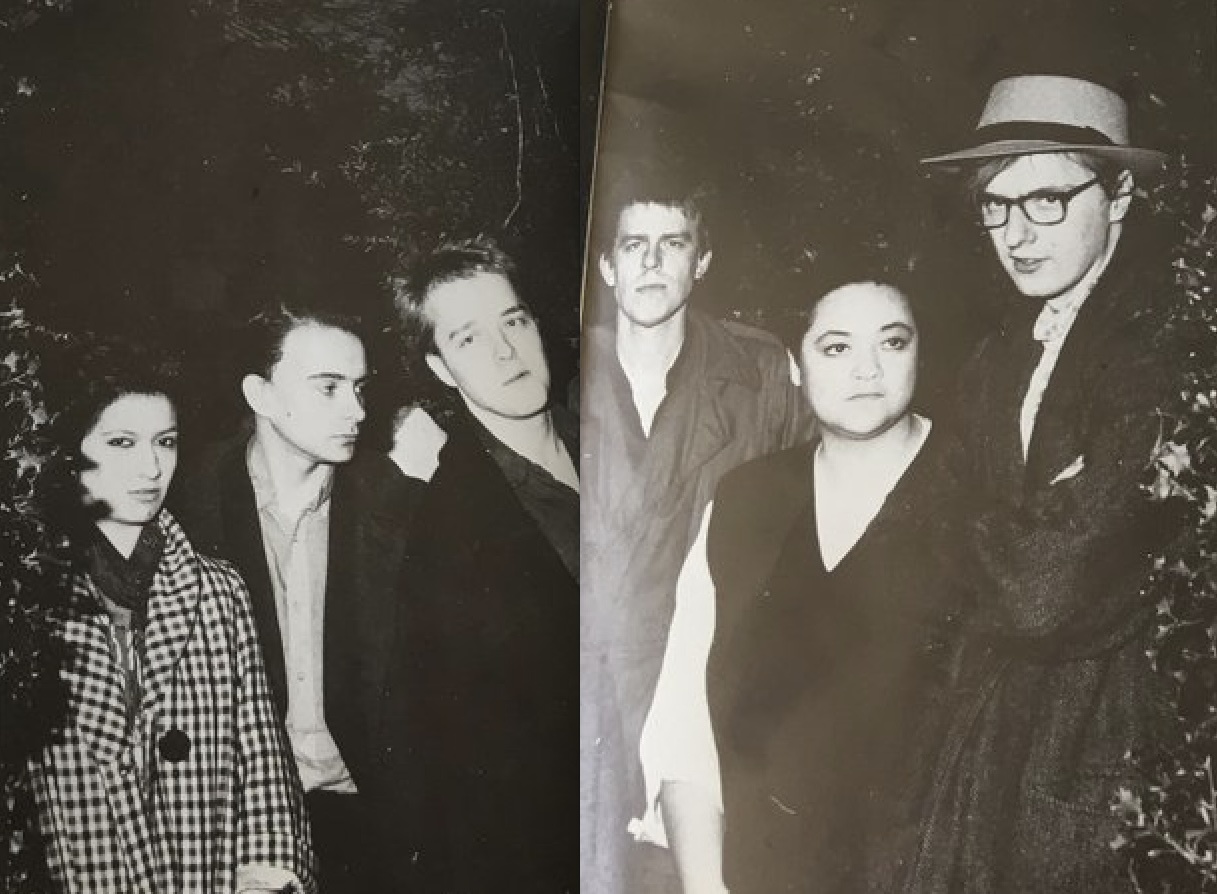
Furniture are essentially a nucleus of three: Tim Whelan (guitar, keyboards, vocals), Hamilton Lee (drums, percussion) and Jim Irvin (voice), who have known each other for years.
Jim: "Three of us had the name Furniture and we started to leave the line-up fairly flexible, just bringing in people to see what happened." Sally Still (bass, vocals) and Maya Gilder (organ) arrived and ended up playing more and more and they have been here ever since.
Their past anonymity was probably only helped by their self-styled commitment to play music they liked, rather than worry about transient trends. The music they liked meant strong songs, often with unorthodox arrangements incorporating such varied instruments as double bass, trombone, clarinet, marimba and of course Roger's wailing sax.
Furniture's style is both varied and unpretentious, relying mainly on the strengths of their songs and their unusual blend of voice melody and rhythm. Their reputation as a band of consistent quality is growing all the time. We met with them soon after the release of the deceivably soothing 'Love Your Shoes' single. The place was Hami's bedsit pad in Ealing, West London. One by one they converged, all six of them, including occasional saxophonist Roger 'N' Azone. After an initial chat, we soon became aware that Furniture's outlook was not only positive and uncompromising but also bravely realistic. With everyone present and correct, we quickly moved on to the actual interview.
INTERVIEW
A "suffocating cliche" very often used in conjunction with Furniture, is that the band have supposed jazz leanings. In reviews a lot seems to be made of this, so we began by asking if this was at all justified?
Jim: Well, we are definitely at the forefront of the new jazz movement! (the rest of the band crack up with laughter at this point). We can't take any of it seriously — we don't claim to be jazz musicians, Hami has been known to play jazz and some of us like jazz records but that is just one facet of what we are doing, we are into a lot of other things as well. When we did When The Boom Was On, the idea wasn't to make a "this is Furniture and this is what we sound like" record, you would be immediately limiting yourself by doing that. We put out that record to have a certain style and a certain feeling that was of itself, that is one record and we don't have to make another record like that again because that said it. There are jazz leanings that turn up, like on some of the more recent stuff that we've done but it's unfair to pick that out as our sound. A lot of our stuff is very guitar based, although there is very little guitar on that record. It's a sad thing but some people just want to use jazz as another label and another cliche.
Most of the songs seem very heartfelt, are they autobiographical?
Jim: Yes and no, some of them are, a lot of them start from getting an emotion and a certain feeling and expanding on it, "what if I take this to its logical conclusion", so you invent the full experience for the lyric. So some of them are not autobiographical. For Robert Nightman's Story wasn't but something like I Miss You definitely was from a personal feeling.
When success continually evades you, it must get pretty depressing at times. How do you cope when there doesn't appear to be a light at the end of the tunnel?
Hami: I think you've just got to keep on going really, there is no point in getting that dejected about it — it just wouldn't work out if you did.
Jim: When we are together as a group, I think we are quite optimistic, at rehearsals and things, by the end we're turning round to each other and saying "this is good stuff"!
Sally: We do wonder, as a group, we do sit there saying "what's going on" sometimes.
Jim: I think as individuals, you tend to get more down about it — but as a group, often we come off stage to, you know, polite heavy breathing from the audience, thinking, that was fantastic, somebody will spot it in a minute and other times you can go off to wild applause and say "that was shit". The group's expectation of the thing is pretty good and quite confident, whereas, as people, we do have our moments of doubt.
Tim: As far as we are concerned, we are already successful, we are successful musically. I think if we were to look back at When The Boom Was On and say: "Well, it was alright at the time but we'll have to do something better", then it would be depressing. There is a double edged thing there, where you could get really, really irritated that it hasn't met with the sort of response it could have done but that doesn't mean that it won't, the record is still there, I don't think the record's worn with time at all myself and as long as you feel confident about what you are doing musically, in the end, that to a certain extent can remain its own reward, it's not enough but it keeps you going. We are in a situation where as long as we've got pride in what we do, that is going to keep us going.
So many bands start off with those ideals and then after the frustration of not having success and putting a lot of work into their music without the records selling, they do tend to compromise and tow the line . . .
Jim: It's an easy trap to fall into and it may be attractive.
Tim: We have had a lot of people come up to us and say "right, that was really good, now, what you have to do . . ." and that's happened a lot recently, everybody and his dog that we've walked into has wanted to put his advice in and we've virtually learned that we know our job better than most people know their's. There is a danger of losing control if you're not careful. There are some groups at the moment that were in the independent market, who have just slowly felt that they have got to compromise in order to get known. But if you take something like Culture Club, they haven't compromised, they want to be what they are, there is no point in competing with that if you don't feel like it because they are it, that appears to be what they want to be, by all accounts. So if you are going in a different direction, there is no point in trying to work within that frame of reference because it's theirs; it's like trying to fight, using someone elses rules.
So what is your way of doing it then?
Tim: I'd like to get away from a lot of the technical aspects of recording at the moment . . .
Jim: Yeah, and all this "Sorry it doesn't get played on the radio unless it's got a sequencer" type of stuff.
Hami: We've got to use this studio and we've got to do it this way, we need a good producer with a "name" . . .
Jim: We wouldn't mind if the good producer with a name understands what we are after but if the good producer with a name hasn't got a clue about what we are after and is just going to make the record he always makes, then there's not a lot of point in us being there.
In Transatlantic Cable there is the lyric about America being one big "Big Mac", does that indicate that you are anti-American or anti-Americanism in this country?
Jim: I can see this song is going to be a bit of a millstone. Straightforwardly I went through a period of being absolutely intrigued by it, not so much present day America, more 40's, 50's, Hollywood, Raymond Chandler, Bogart, Jazz, that sort of imagery really appealed. So I wrote this song where the first verse was wallowing in that sort of feel, y'know, lonely sax player, heard down an alley, all that business and then the second verse just goes, hold your horses here Jim, you live in Hounslow, this has got absolutely nothing to do with you at all and that's really all it is, it's got no more vitriol in it than that, it was just pointing out that we get an awful lot of American thrown at us — and why is it so attractive when it's got absolutely nothing to do with our way of life.
Tim: I played it to two Americans recently and they didn't seem to object to it at all, in fact they seemed to quite agree with it.
A lot of songs seem very frustrated in a way, is that a reflection of yourselves?
Jim: People like us do have a certain frustration because of the way that an ideal is presented to you by the media, take for example the argument that the Women's Movement has been putting up for years, that all you get in magazines are models to look like, everybody's being given all these role models to follow . . .
Sally: Even bands . . .
Jim: . . . yeah, especially bands, to be a group you have to be this — it is written, it's almost like there are the "Ten Commandments" of pop success that someone has implanted in every journalist and radio producers head and it's really tough to chip away at these tablets, make commandment number eleven "thou shalt not follow what has gone before".
Tim: One of the most frustrating things is that when you actually play it to people who have got nothing to do with the record business, they tend to accept it for what it is. I've always believed that a lot of the divisions into boxes that gets thrown at you, is a division that only exists on the business side. It doesn't exist in people, I mean, I know people who like the most ridiculous, unconnected groups, like Rip, Rig and Panic and Spear Of Destiny, Deep Purple and D.A.F., things like that!
Hami: Tik'n'Tok and Furniture — there are no rules!
Tim: It's not a case of "that would be healthy", that's the way it is but you won't get many people to recognise that.
Jim: There must be someone out there who's favourite groups are Test Dept and Chris De Burgh, thinking "Oh my God, I'm a freak" (riotous laughter) and that's the sort of people we are trying to appeal to, there must be millions of them, one thing I've often thought of is that the music itself isn't going to smack you round the head and go "hey, we're wild and new!" (laughs) People who read about us and then listen to the records could well think "what are they on about" because really, it does just boil down to the quality thing or trying to get something into the stuff that's missing when you are too busy worrying about all the other diversions.
"Dancing The Hard Bargain" is probably the hardest thing you've recorded both musically and lyrically, is that about role playing?
Jim: Yes it is really, it's a bit out on a limb that one because it's more bitter, I don't know why, that was another song that just wrote itself really. The frustration in that one was through watching people desperately trying to live up to those roles, it's not about me having to live up to a role, it's about watching others trying to be cool, trying to pick up women, or playing hard to get. There is this stupid thing about playing hard to get, people seem to think that is how you go about forging some sort of relationship, like, you fancy someone and then as soon as they notice you, you back off, it's just ridiculous! And that's what that's about, that whole pathetic way of behaving — Why don't you just go! (shouting) "I love you, you c**t!" and just dive in there and smother someone with kisses! (laughs). I was very cross when that was reviewed in Sounds because the guy wrote "the singer cynically adding up the cost of getting into his girlfriends knickers" and I thought "shit, someones got the completely opposite interpretation of that song" and that's a bit worrying because as soon as I do anything that's slightly ironic or anything with a bit of ambiguity in it, rather than sledge-hammering the point home, it's taken wrongly.
In contrast Love Your Shoes was instantly appealing, was that a deliberate attempt to sound commercial?
Jim: Well, many hands have laboured at the mixing desk in an attempt to bury this song . . .
Hami: But everyone loves it now . . .
Except the band?
Tim: The song is still there, somewhere, but the live version is more angry.
Jim: Yeah, the trouble with that is, quite a lot of people have said "this is very pleasant" but it wasn't meant to be, it wasn't meant to be very hard but we intended it to have a sort of appeal with a niggly something in the background. It's still there in the words, y'know any song with the words in the chorus, "we're going to have the best time, the time of our worthless lives", isn't exactly a singalong ditty.
How do you view the London pub/club circuit, i.e. do you feel that there is one now?
Tim: We banned ourselves from it a few weeks ago!
Hami: There are only really two venues now in north west London and that's the Greyhound and the Clarendon and we've played those places so many times before . . . it's nice just to go back every now and then and play them.
Tim: The old live music scene, whatever there was in London, there's only really the residue left of it now.
Jim: People don't go to see groups like they used to.
You mentioned before the interview started that you are often criticised for the way you look. What is the criticism?
Sally: It's because we are really ugly! (laughs).
Tim: It's because we don't have an act . . .
Jim: . . . We're just a bunch of misfits. One thing which is interesting, is that every person that has slagged us off in live reviews has not actually said anything about the group or the music, or just the general effect of the group. They've just picked on individuals and none of them have mentioned that there are two girls in the group . . .
Sally: Which is cool . . .
Jim: . . . Yes, in a way that's really good, it's like, they fitted in, so no-one's noticed. There was one which said "Furniture don't make any effort before they step on stage". It sounded like he was slagging off the fact that he didn't understand why there were all these people applauding.
What would you say is your ambition as a group, what do you hope to achieve?
Jim: Lots of people humming our tunes . . .
Hami: . . . And being mobbed in Acton High Street! (laughs)
Jim: Well, I've got no ambitions to be George Michael, I expect ol' George is quite a lad, he's probably a very nice chap but I'd hate to have that much attention focused on me.
Tim: All we want is to make a living out of this, I mean, I'd be happy to make more than a living but only if it happens . . .
Hami: You want to be famous, Tim, let's face it!
Tim: Yeah, (laughs), I want to be terribly famous.
Has anyone got any personal ambitions?
Hami: I want to be a housewife! No, seriously, I'd like to be influential and that's all really.
Jim: Yes I think that's the real thing, just to feel that you might have inspired a few other people to get up and do something.
Reflecting back, long after the interview was over, it struck us how different their attitude was to many bands we have interviewed in the past, in not being the least bit desperate to 'make it'. There they were, unknown, unconcerned and confident that their time would come. As vocalist Jim succinctly put it, "we've only brought out nine or ten tracks, we've hardly scratched the surface of what we can do, it's just a case of plugging away, getting more stuff available and letting people make up their own minds".
Just lately their optimism has paid off because recently a Janice Long session was broadcast and favourably received and now even the music press are slowly becoming aware of their existence, so do yourself a favour and search out their atrociously distributed records, or catch them live while you can still get a good look at them — believe me, they're not that ugly!!
Furniture interviewed by Francis Drake & Peter Gilbert